There are few places in Ireland as jaw-dropping as the Cliffs of Moher. And I say that as someone who’s been more times than I can count – as a kid on school trips (packed lunch and all), and as an adult whenever we had visitors in town and wanted to show off a bit.
It doesn’t matter how often you’ve seen them. Those dramatic cliffs never get old.
If you’re wondering if you can actually take a day trip to Cliffs of Moher from Dublin, the answer is yes. Yes, they’re on the other side of Ireland and it’s a long day, but it’s 100% worth it.
In this post, I’ll walk you through exactly how to plan your day trip from Dublin to the Cliffs of Moher, whether you’re going solo, joining a tour, or heading off as a family on a road trip.
You might also like:
- 21 Magical Things To Do In Dublin in Winter
- The Best Dublin 2 Day Itinerary (From A Local’s Perspective)
- Ireland 6 Day Itinerary: How To Road Trip Through Ireland
- How To Plan An Easy Day Trip From Dublin To Belfast
A Little About the Cliffs of Moher
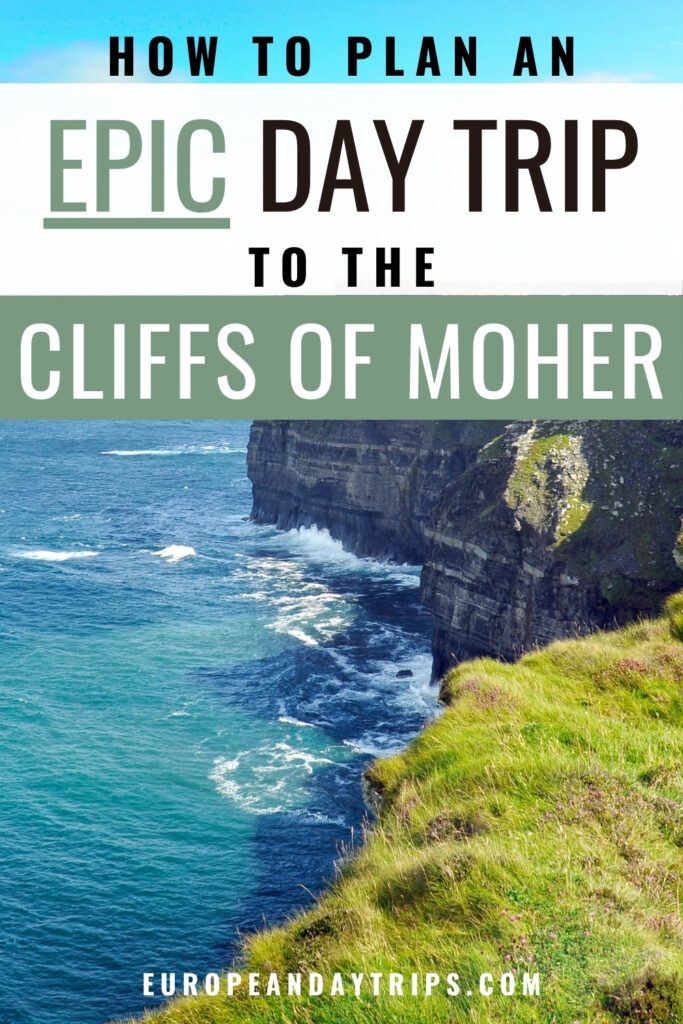
A Unesco Global Geopark, the Cliffs of Moher are one of the world’s great natural attractions. Rising up to 214 metres at their highest point and stretching for around 14 kilometres along the rugged coastline of the West Coast of Ireland, they’re dramatic, wild, and unmistakably Irish.
On a clear day, you can see all the way out across the Atlantic Ocean, with the Aran Islands in the distance.
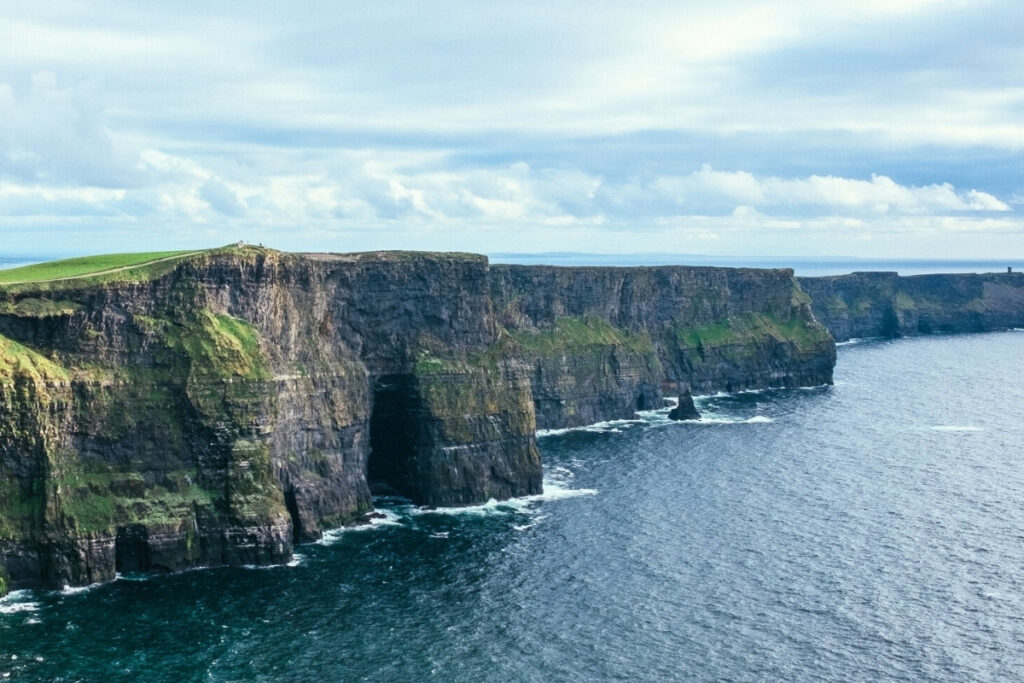
They’ve been featured in films like Harry Potter and the Half-Blood Prince and The Princess Bride, but nothing on screen really does them justice.
A Cliffs of Moher day trip is probably the most popular day trip to take from Dublin. It’s a long day, sure, but if you’re up for an early start and some time on the road, it’s a great way to get a taste of Ireland’s coastal scenery in just one day.
How Far Are the Cliffs of Moher from Dublin?
The Cliffs of Moher are located in County Clare, on Ireland’s west coast (and my home county!). From Dublin, you’re looking at roughly 270km (about 170 miles) each way, which translates to around 3.5 hours of driving one way. That’s if you don’t hit traffic (which you likely will) or stop for snacks (which you definitely should).
If you’re doing it as a day trip, you’ll want to hit the road early. Like, grab-a-coffee-and-go early. Most tours leave Dublin between 6:30–8am and get back around 7–8pm, so it’s a full day. That said, the drive takes you across the country, through some lovely scenery, rolling fields, stone walls, the whole Irish postcard deal.
The main roads are well maintained for the most part, but you should expect some narrower rural roads as you get closer to the coast.
In short, it’s doable in a day, but you’ll need to get an early start and factor in at least 7–8 hours of travel total for a round trip.
How to Get to the Cliffs of Moher
There are three main ways to get from Dublin to the Cliffs of Moher: drive yourself, join a guided day tour, or attempt it using public transport. Each comes with its own pros and cons, obviously depending on your travel style, budget, and how much planning you want to do.
Driving Yourself
Time required:
About 3.5 hours each way, depending on traffic and whether you stop along the route. You’ll also want to factor in a couple of hours at the Cliffs themselves.
Renting a car in Dublin:
You’ll find all the usual rental companies at Dublin Airport and in the city centre, but keep in mind that driving in Ireland means some narrow country roads, roundabouts, and driving on the left. Most cars are manual, so if you need an automatic, pre-book your rental car in advance.
Parking at the cliffs:
There’s a large car park across the road from the Cliffs of Moher Visitor Centre. The parking fee covers both parking and entry to the centre. But you should note the parking fee is per person and not per car.
Pros:
– You’re on your own schedule
– You can stop in places like Galway, Doolin, or the Burren
– Handy if you’re travelling as a group or want to explore more of the west
Cons:
– It’s a long day behind the wheel
– Driving in unfamiliar rural areas can be tricky
– Fuel costs and tolls add up
Need to book a trip?
These are my go-to sites for booking trips:
Guided Day Tours
If you’d rather not spend the day behind the wheel, joining a guided day tour is the easiest way to see the Cliffs of Moher from Dublin. Be warned, most tours last around 12–13 hours, with early morning departures and late returns.
What’s typically included:
Transport by coach or minibus, an experienced tour guide, and entry to the Cliffs of Moher Visitor Centre are standard. Many tours also include stops in places like Galway City, The Burren, Aran Islands, Doolin, or even Bunratty Castle. You’ll usually get about 1.5–2 hours at the cliffs themselves.
Average prices:
Expect to pay between €50 and €75 per person. That usually covers your transport, guide, and admission fees. Meals aren’t usually included, but there are lunch stops built in.
Who it’s best for:
Ideal for first-time visitors, solo travellers, or anyone short on time who doesn’t want the hassle of planning the logistics. Everything’s taken care of – you just need to show up and enjoy the Cliffs of Moher tour!
My recommended tours:
1. Cliffs of Moher, Ennis & Bunratty Castle Day Tour from Dublin
This one packs in a bit of everything — coast, countryside, and castle. After a couple of hours at the cliffs, the tour heads to Ennis, a small town with a proper Irish feel to it, and then finishes at Bunratty Castle, one of the best-preserved medieval castles in Ireland (and my favourite castle in the country). Entry to the castle and folk park is included.
This is a good option if you’re into history or want a break from just landscapes.
2. Cliffs of Moher, Burren & Galway City Day Tour from Dublin
This is the most popular route, and for good reason. It’s pretty well-balanced. You’ll get your cliff time in, then a scenic drive through the Burren (that incredible, rocky landscape that looks like something from another planet), and then a quick stop in Galway City. It’s a bit of a whirlwind, but great if you want variety.
3. Cliffs of Moher and Galway City Full-Day Trip from Dublin
This tour skips the Burren and focuses on just the cliffs and Galway, so it’s slightly more relaxed than the others. You’ll still have around 1.5–2 hours at the Cliffs of Moher and plenty of time to wander around Eyre Square before heading back to Dublin.
Pros:
– No driving or route planning
– Guides offer interesting facts and local knowledge
– You get to see more than just the cliffs in one day
Cons:
– Fixed itinerary
– Less time at each stop
– Can feel a bit rushed, especially during peak season
c) Public Transport
I’ll be honest, getting to the Cliffs of Moher from Dublin city by public transport isn’t ideal for a day trip. It’s doable, but only if you don’t mind a long day with multiple connections and not a lot of flexibility.
Here’s what the journey looks like:
- Step 1: Dublin to Galway or Limerick
You’ll first need to get yourself to either Galway or Limerick by train or bus. Trains from Dublin Heuston to Limerick take about 2.5 hours, while trains from Dublin to Galway (via Connolly or Heuston Station) also take around 2.5 hours. Bus Éireann and Citylink also run regular services between Dublin and both cities. - Step 2: Galway/Limerick to the Cliffs
From Galway, take a Bus Éireann 350 service, which goes to the Cliffs of Moher via the scenic Wild Atlantic Way through Doolin. From Limerick, you would need to get a bus to Ennis where the same bus route also connects, but either way, you’re looking at another 2–2.5 hours on the bus.
Total travel time:
With transfers and waiting times, you’re looking at around 5–6 hours each way, so it’s more suitable if you’re staying overnight somewhere in the west. Trying to do the full round trip in a single day from Dublin is going to leave you exhausted, with very little time at the actual cliffs.
Ticketing tips:
You can book trains via Irish Rail and check bus times on Bus Eireann. The 350 route operates year-round, but less frequently in the off-season, so I recommend checking the timetable carefully.
Who this is best for:
Travellers who are planning to stay overnight in Galway, Limerick, or Doolin. I wouldn’t really recommend for same-day return trips, unless you’re ok with a lot of travel time and don’t have much time.
Best Time to Visit the Cliffs
Ireland’s weather isn’t exactly known for being predictable, but some months are definitely better than others if you want to catch the Cliffs of Moher on a clear day.
Best months:
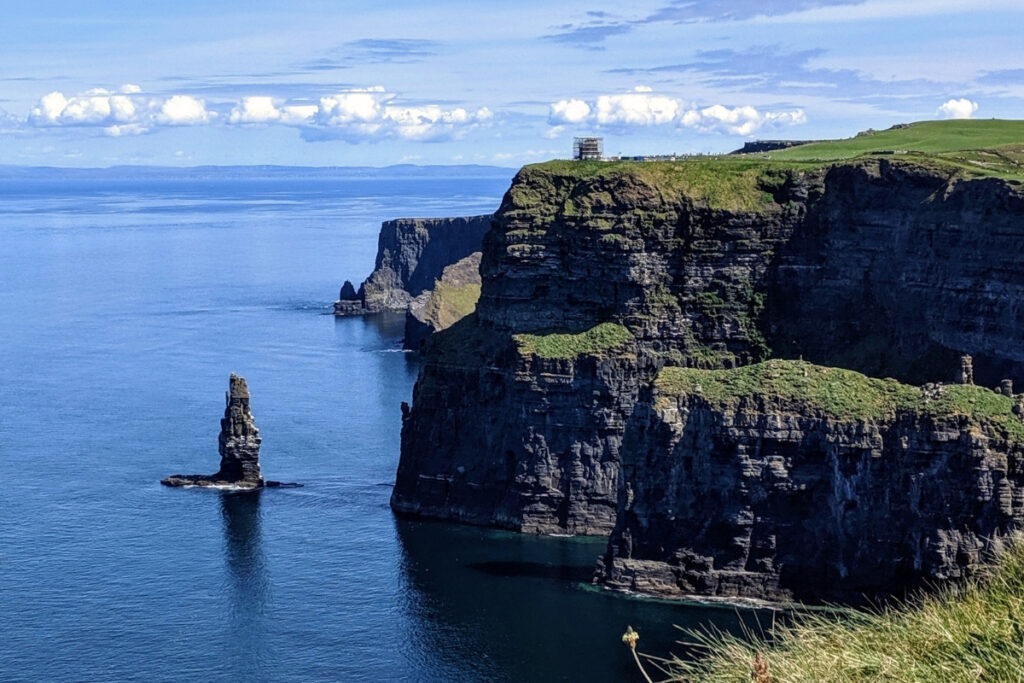
Your best bet is between May and September. These months usually have the mildest weather, the longest daylight hours, and a better chance of avoiding heavy fog, which can completely block your view of the cliffs if you’re unlucky. That said, it’s still Ireland, so pack for rain just in case.
Time of day:
If you’re driving yourself, aim to get there early in the morning or later in the afternoon. Midday is when most of the tour buses arrive, so it can get crowded on the viewing platforms. Early morning visits also mean better light for photos (and fewer people in them).
Off-season visits:
October to April is quieter, but you’re more likely to get wind, rain, or low visibility. The cliffs are still open year-round (only closed between 24 and 26 December), but some nearby attractions or cafés may operate on reduced hours.
Check the weather before you go:
Seriously, check the forecast on the morning of your trip. Conditions at the cliffs can change quickly, and there’s nothing worse than driving across the country only to be met with a wall of fog.
What to See and Do at the Cliffs of Moher
Once you’ve arrived, you’ll want to make the most of your time at the Cliffs of Moher, especially if you’re not on your own time (i.e. with a tour group). Here’s what’s actually there – beyond the obvious breathtaking views over the Atlantic:
IMPORTANT: There are barriers in place at the edge of the Cliffs of Moher for your safety. I can’t stress this enough – DO NOT CROSS THESE BARRIERS. Many people have sadly been blown off the cliffs and lost their lives due to lack of caution. Please respect these barriers and stay within designated safe areas (even if you don’t think it’s a particularly windy day).
Cliff Walks:
There are a few marked walking paths along the cliffs. The main trail stretches from Hag’s Head in the south to Doolin in the north, but most visitors just walk a short section from the Visitor Centre to O’Brien’s Tower and back. The views are incredible in both directions, and you don’t need to hike far to get a decent photo.
O’Brien’s Tower:
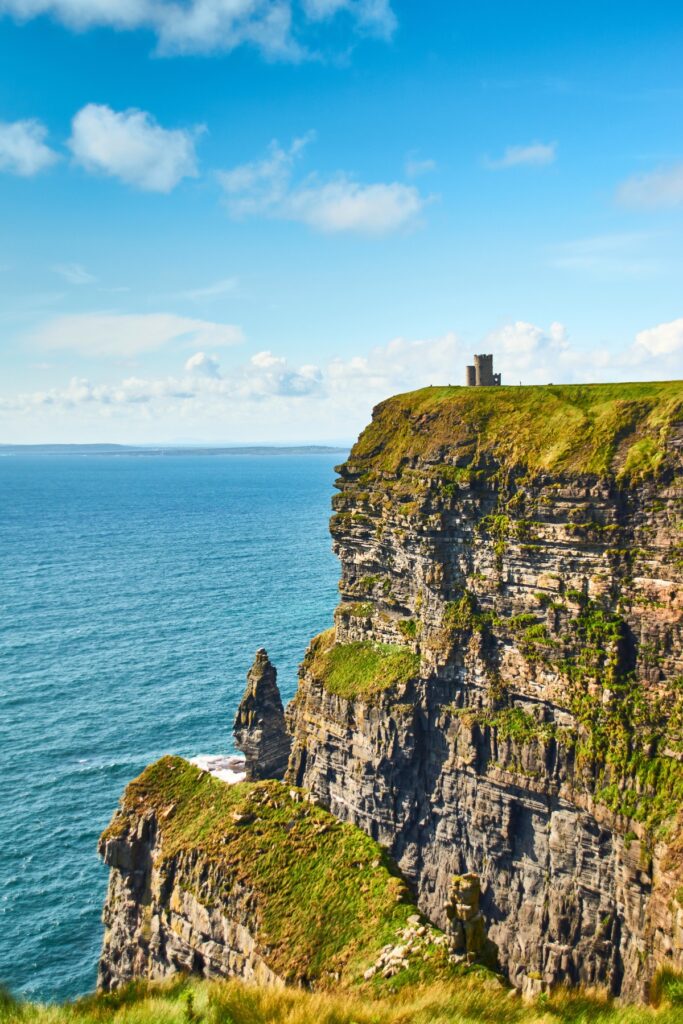
This small stone tower sits at one of the highest points along the cliffs. Built in 1835, it was a Victorian viewing platform… before Instagram was a thing! You can climb it for a small fee (around €5). It’s optional, but it does give you a slightly elevated view on a clear day.
Cliffs of Moher Visitor Centre:
The centre is built into the hillside and has an exhibition, short film, café, toilets, and gift shop. If you’re on a tour, your entry fee included. If you’re driving, your parking ticket covers access to the centre. It’s worth a quick look, especially if the weather turns.
Photo Spots:
The most popular photo spot is just a short walk north of the Visitor Centre — you’ll know it when you see it. If you walk further south (towards Hag’s Head), the paths are quieter and the views are arguably better.
Wildlife:
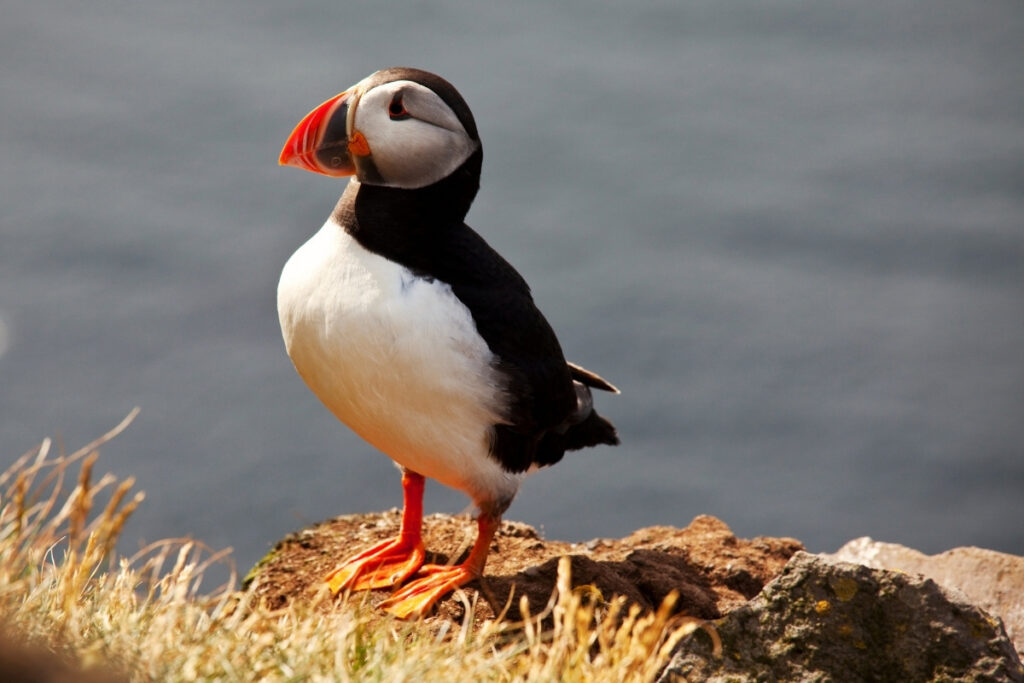
If you’re into birds, you might spot puffins, razorbills, or guillemots nesting along the cliff face (especially between April and July). On a very calm day, you might even see dolphins out at sea.
What to Pack for the Day Trip
You don’t need to bring the kitchen sink, but you do want to be prepared — the weather at the Cliffs of Moher can change quickly, and you’ll likely be out for 12+ hours if you’re doing a full day trip from Dublin.
Here’s what I recommend bringing:
- Waterproof jacket – This is non-negotiable. Even if the forecast looks fine, the cliffs can be windy and damp.
- Layers – A hoodie or fleece under your jacket works well. Mornings and evenings can be chilly, even in summer.
- Comfortable shoes – There’s a fair bit of walking involved, often on uneven or muddy paths. Leave the sandals at home.
- Snacks – Especially if you’re on a tour and not sure when the lunch stop will be. Bring a reusable water bottle too.
- Phone charger or power bank – Long day, lots of photos, and you don’t want to be stuck with 2% battery in the middle of nowhere.
- Cash/card – The Visitor Centre accepts cards, but it’s always good to have a bit of cash for small stops or snacks in rural areas.
- Sunglasses and sunscreen – On the off chance the sun decides to show up, you’ll be glad you packed both.
Don’t miss my full guide on what to pack for a trip to Ireland.
You might also like: